
TL;DR:
- A basic OBD-II scanner enables DIY diagnosis by reading codes and live data.
- Combining code readings with live data helps accurately identify vehicle issues and avoid unnecessary parts.
- Calling a skilled mobile mechanic saves time, money, and provides professional diagnostics at home.
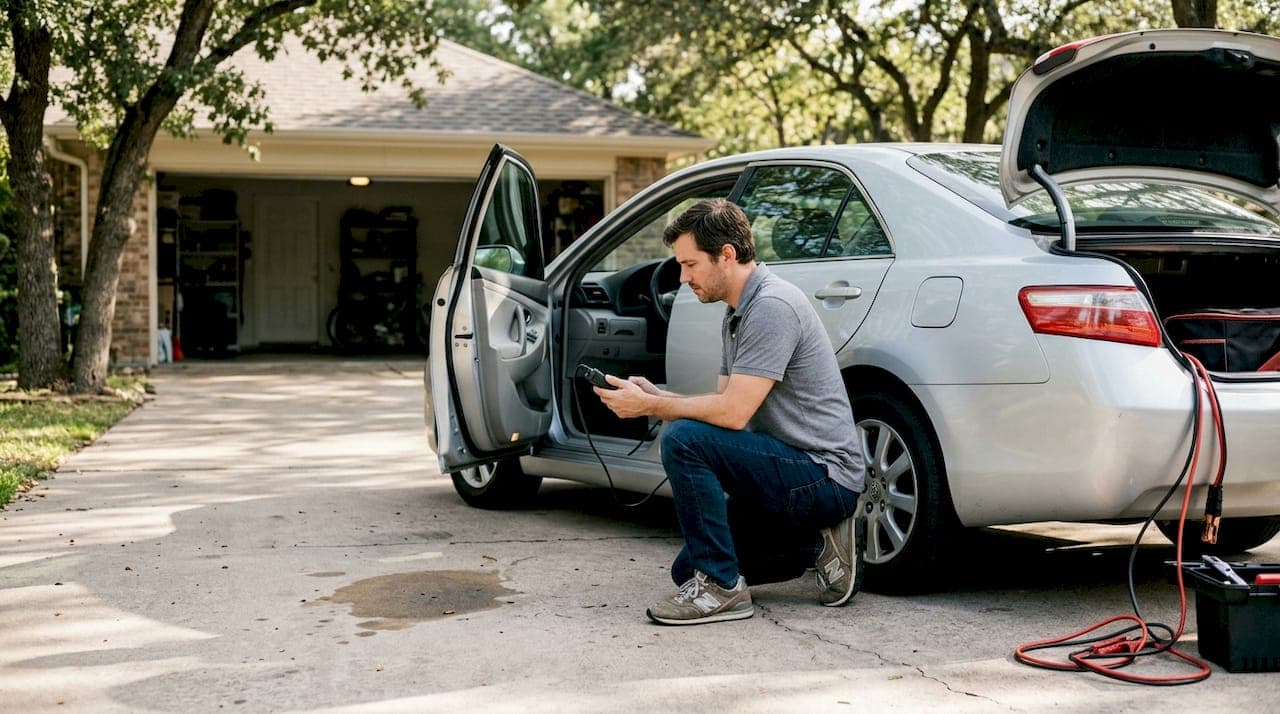
A check engine light flickers on during your Dallas commute, temperatures are pushing 100°F, and the nearest shop wants you to wait three days for an appointment. That scenario plays out for thousands of DFW car owners every week. The good news is that most vehicle problems leave a clear digital trail, and you can follow that trail yourself with a basic scanner and a bit of know-how. This guide covers the tools you need, how to read codes and live data, the mistakes to avoid, and when calling a mobile mechanic makes more sense than any other option.
Table of Contents
- What you need before you start
- Step-by-step diagnosis: Reading codes and live data
- Troubleshooting common pitfalls and mistakes
- When and how to call a mobile mechanic in DFW
- The reality: Why smart DFW car owners mix self-scanning and mobile pros
- Get expert mobile diagnostics in DFW—no shop visit needed
- Frequently asked questions
Key Takeaways
| Point | Details |
|---|---|
| Start with an OBD-II scan | Most car issues in DFW can be quickly identified by scanning for codes and checking live data readings. |
| Don’t replace on codes alone | Always verify error codes with live sensor data before buying parts or scheduling repairs. |
| Mobile mechanics save time | DFW mobile services resolve most issues at your home within an hour—no tow or shop wait required. |
| Check reviews before hiring | Choose mobile pros with at least 4.5 stars and 'diagnostics' praised in online reviews for best results. |
What you need before you start
To get started, here's what you need at your fingertips. Proper preparation cuts diagnostic time in half and prevents the kind of guesswork that leads to wasted parts purchases.
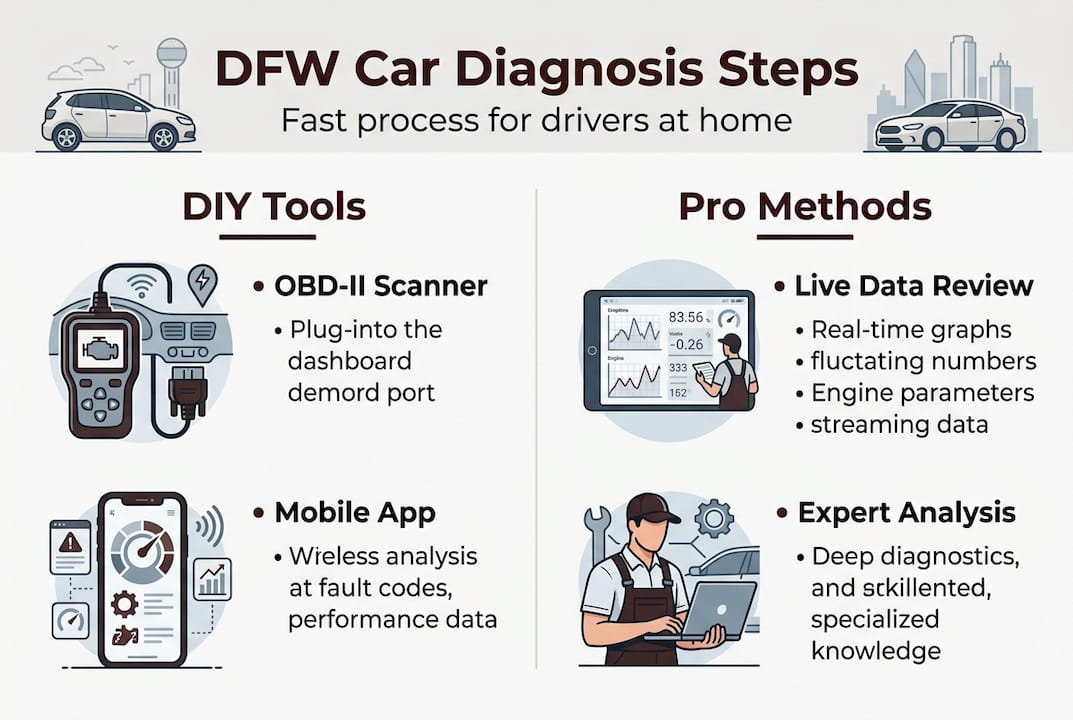
The single most important tool is an OBD-II scanner. The primary methodology for diagnosing car problems is using an OBD-II scanner to read Diagnostic Trouble Codes (DTCs), check live data streams, freeze frame data, and readiness monitors. Basic units start at $50 and plug into the OBD-II port located under your dashboard, usually near the steering column.
Beyond the scanner, gather these items before you begin:
- OBD-II scanner ($50 or higher for Bluetooth models that pair with your phone)
- Smartphone with a free app like Torque or OBD Fusion for live data display
- Flashlight or work light to inspect the engine bay safely
- Notebook or notes app to record every code and reading
- Gloves to keep hands clean and protected
- Vehicle owner's manual for model-specific sensor locations
The table below shows how DIY tools compare to what a professional brings to your driveway.
| Tool | DIY setup | Mobile mechanic setup |
|---|---|---|
| OBD-II scanner | Basic ($50-$150) | Pro-grade bidirectional scanner |
| Live data graphing | Limited on budget units | Full graphing and logging |
| EVAP and ABS access | Partial | Complete system access |
| Repair documentation | Manual notes | Digital report provided |
Pro Tip: When searching for mobile mechanic services online, filter for providers with 4.5 stars or higher and at least 30 reviews. Mention of "diagnostics" in those reviews is a strong signal of technical competence.
Safety matters before you touch anything. Always shift to park and set the parking brake. Never run diagnostics with the engine on unless the procedure specifically requires it. Keep hands and tools away from belts and fans.
Step-by-step diagnosis: Reading codes and live data
Now that you're prepared, let's walk through the actual diagnostic process. Following these steps in order prevents missed codes and bad conclusions.
- Locate the OBD-II port. It sits under the dashboard on the driver's side, within 18 inches of the steering wheel on virtually every car built after 1996.
- Plug in the scanner. With the engine off, insert the scanner firmly until it clicks.
- Turn the key to the ON position. Do not start the engine. This powers the car's computer without cranking.
- Select "Read Codes" on the scanner menu. Wait for the unit to communicate with the ECU (Engine Control Unit, the car's main computer).
- Record every code displayed. Write down the exact code number and the short description shown.
- Switch to live data mode. Monitor fuel trims, O2 sensor voltage, RPM, and MAF (Mass Air Flow) sensor readings in real time.
- Compare readings to benchmarks. Healthy idle RPM sits between 650 and 750. O2 sensor voltage should cycle between 0.1V and 0.9V. Fuel trims beyond plus or minus 10% suggest a fueling or vacuum issue.
For example, codes like P0301 indicate a cylinder 1 misfire, but confirming the root cause requires checking fuel trims and O2 sensor data together. The code points to a symptom, not the broken part.
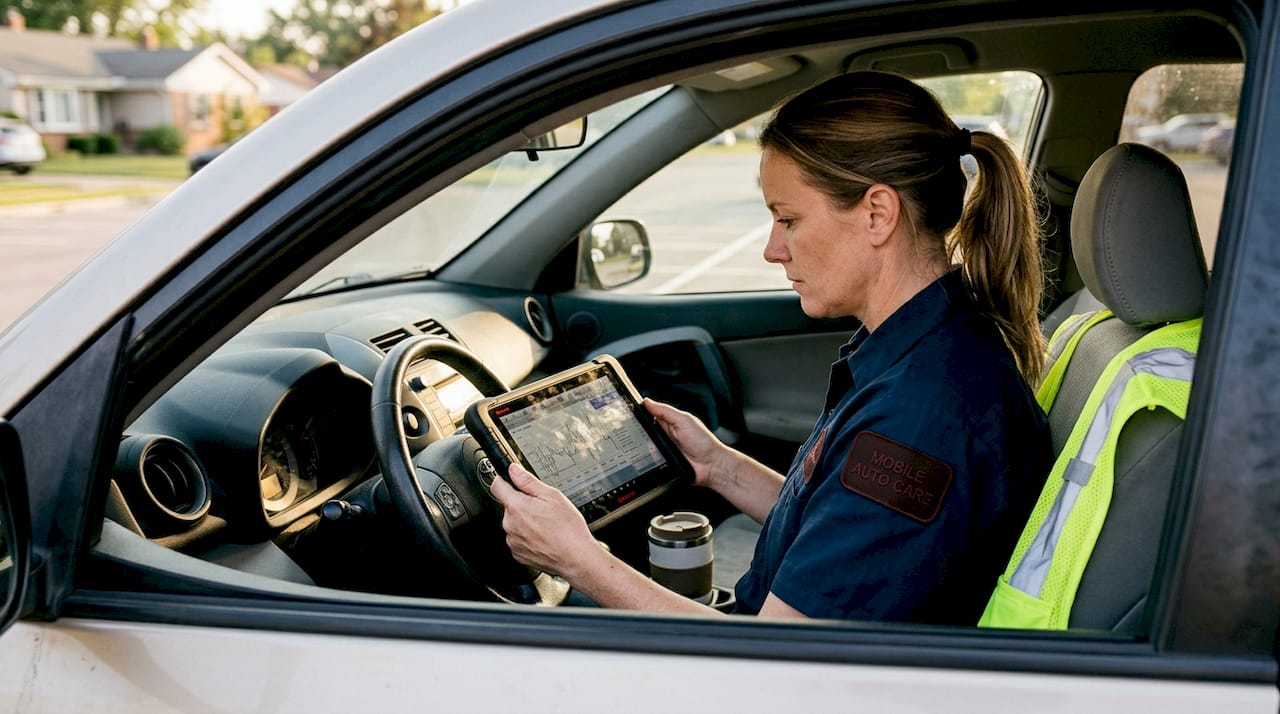
Need DFW OBD scanning help for complex codes? A professional scanner can graph sensor data over time, which reveals intermittent faults that a basic unit will miss.
| Diagnostic method | Accuracy | Best for |
|---|---|---|
| DIY basic scanner | Moderate | Simple, stored codes |
| DIY with phone app | Good | Live data monitoring |
| Mobile mechanic pro scanner | High | Complex, intermittent faults |
Pro Tip: A code is a symptom, not a diagnosis. Always cross-reference the code with at least two live data points before ordering any part. This single habit saves most car owners $200 or more per repair.
Troubleshooting common pitfalls and mistakes
Once codes and data are reviewed, it's just as important to sidestep common missteps. Most diagnostic errors fall into predictable patterns, and knowing them in advance keeps you from repeating them.
The most expensive mistake DFW car owners make is ordering parts based on a single code. Replacing parts based solely on codes without verifying with live data leads to repeat failures and wasted money. A P0420 catalyst efficiency code, for instance, could point to a bad catalytic converter, a failing O2 sensor, or even an exhaust leak. Only live data narrows the field.
Watch out for these specific situations:
- Intermittent faults show up only under certain conditions. These need live data graphing over a test drive, not a quick code read in the driveway.
- EVAP system codes (P0440 series) require a smoke test to locate leaks. A scanner alone cannot confirm the source.
- Battery and alternator confusion: Always perform a battery load test before assuming the alternator is bad. A weak battery mimics alternator failure almost perfectly.
- Safety around a running engine: Never work beneath a car with the engine on unless it is on a stable lift with proper support.
"Skipping live data verification is the number one reason car owners replace parts twice. The code tells you where to look, not what to replace."
Mobile mechanics providing diagnostic support in Dallas-Fort Worth typically resolve these edge cases in under one hour. That speed alone saves the $100 or more a tow truck costs, plus the multi-day shop wait.
When and how to call a mobile mechanic in DFW
Finally, let's look at situations where expert help is the best move and how to get the most out of it. Not every problem requires a pro, but some situations make professional help the clear choice.
Handle these yourself if you're comfortable:
- Reading and clearing simple stored codes
- Checking battery voltage with a multimeter
- Replacing air filters, wiper blades, or cabin filters after confirming the code
- Basic visual inspections for obvious leaks or broken parts
Call a mobile mechanic for these situations:
- Codes that return immediately after clearing
- Intermittent warning lights with no stored code
- ABS, airbag, or transmission codes requiring bidirectional scanner commands
- Any repair needing specialty tools, such as fuel pressure gauges or smoke machines
Top DFW mobile mechanics like Mike's Mobile Mechanic Service, First Choice Mobile Mechanics, and Jesus Mobile Mechanic carry strong ratings for diagnostics and troubleshooting across the area. When you find a mobile mechanic online, confirm that reviewers specifically mention diagnostic accuracy, not just friendliness.
| Situation | DIY | Call mobile mechanic |
|---|---|---|
| Simple stored code | Yes | Optional |
| Intermittent fault | Partial | Recommended |
| ABS or airbag code | No | Required |
| No-start, unknown cause | Battery check only | Recommended |
| Post-repair verification | Yes | Optional |
What to expect when a mobile mechanic arrives: a full scan with a pro-grade tool, live data review, a verbal summary of findings, and written documentation of codes and recommended repairs. Average resolution time is about one hour.
The reality: Why smart DFW car owners mix self-scanning and mobile pros
Conventional wisdom says take every warning light straight to a shop. That advice benefits shops, not car owners. The reality is more practical.
A $50 OBD-II scanner gives you real information within minutes. Most stored codes point to a small set of likely causes. Reading that data yourself before calling anyone puts you in a stronger position. You know what the car is reporting, and you can describe it clearly. That alone shortens any professional diagnostic session.
Shop visits frequently result in parts being replaced before root causes are confirmed. That pattern costs DFW drivers real money every year. Mobile mechanics who come to your driveway tend to work more transparently because you're present for the entire process.
The smartest approach is layered. Start with your own scanner. If the data is clear and the fix is simple, handle it. If the codes are complex or the fault is intermittent, escalate to affordable local diagnostic help rather than a full shop visit. You get shop-level accuracy without the overhead, the wait, or the upsell pressure.
Get expert mobile diagnostics in DFW—no shop visit needed
RISE HIGH MOBILE MECHANICS brings professional diagnostic equipment directly to your driveway across the Dallas-Fort Worth area. Whether you've already pulled codes and need a second opinion or you're starting from scratch with a mystery warning light, the process is straightforward.
Schedule a session and a certified technician arrives with pro-grade scanning tools, performs a full system check, and provides written documentation of every finding. RISE HIGH holds strong ratings from DFW customers and offers no-hassle payment plans to keep repairs accessible. Skip the tow, skip the waiting room, and schedule a mobile mechanic at a time that works for you. Same-day appointments are often available across the DFW metro.
Frequently asked questions
What are the most common OBD-II codes and what do they mean?
Common codes like P0301 mean cylinder 1 misfire, but you must check live data including fuel trims and O2 sensor readings to confirm the actual root cause before replacing anything.
How much does a mobile diagnostic session cost in DFW?
Mobile mechanics in Dallas-Fort Worth typically charge $80 to $150 for a full diagnostic session. That is usually less than a tow truck fee alone, and mobile services often resolve in 1 hour, saving both towing costs and multi-day shop wait times.
Can I clear codes myself with a cheap OBD-II scanner?
Yes, almost any OBD-II scanner lets you clear codes, but avoid clearing them before repairs are complete. Erasing codes also erases the live data streams and DTCs your mechanic needs to confirm the diagnosis accurately.
What if my engine won't start—should I test the battery or starter first?
Always begin with a battery load test. A reading under 9.6V while cranking is a strong indicator of battery failure, and replacing a $150 battery before a $400 starter is always the smarter first step.